Facts checked 2026-11-15.
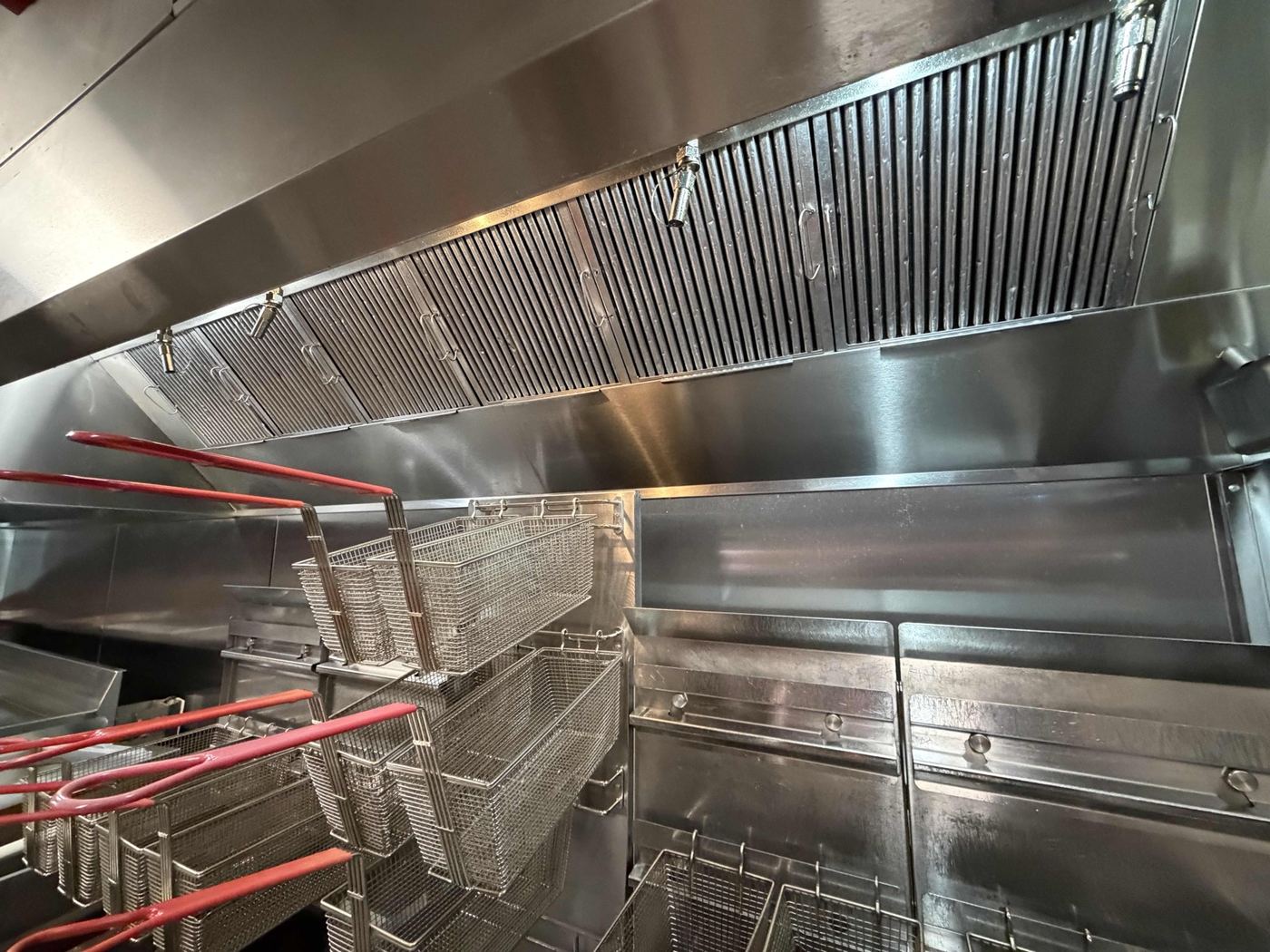
Buying equipment for a Georgia kitchen starts with what the health rules accept. Describe what you need in the form, and Georgia Commercial Kitchen Connect sends the request to equipment dealers in your area. Each dealer quotes on its own terms.
What counts as commercial grade
Rule 511-6-1-.05 says food service equipment must be commercial grade. Equipment certified or classified for sanitation under a recognized American National Standard, by an accredited program, is considered to meet the rule's design standards when used as intended. NSF and UL are two named examples.
Look for the certification mark on the nameplate. Ask the dealer to show the certification for each piece, and keep the spec sheets together.
Your plan packet lists the fixed equipment
When a new or heavily remodeled kitchen goes to the county health office, the packet gives the type and model of each fixed unit, with the floor plan and mechanical plans. The plans go in at least 14 business days before construction. After approval, a swap is something to raise with the health office first. The permit follows a preoperational inspection, so the units installed should match the approved plans.
Get prices for this job. Send one request and pick how many local companies quote it.
Get quotesWhere equipment meets other rules
Cooking equipment does not sit alone. Anything that gives off grease-laden vapor goes under a hood. Before cooking appliances move under an existing hood, check with the licensed fire company that services the suppression system, since the nozzles are aimed at specific appliances. Drains and grease traps fall under Rule 511-6-1-.06.
Georgia Power rebates
Georgia Power's public rebates page lists two items that fit a kitchen:
- $500 per horsepower for high-efficiency ventilation hoods with sensor control
- $350 per ENERGY STAR commercial dishwasher, with low-temperature units left out
Every rebate has terms of its own. Read them before you place an order.
A short buying list
- Get the certification for each fixed piece before you buy it.
- Note the make and model for the plan packet.
- Check where each unit sits compared with the hood, the drain and the suppression nozzles.
- Look up the utility rebates before you place the order.
- Keep receipts, spec sheets and invoices in one place.
When equipment shows up late
A delivery date can slip, and the plan review does not move with it. Equipment that is not installed by the preoperational inspection may delay the permit, because the inspector checks that the place was built as approved. Ask each dealer for a delivery window in writing, and tell your contractor when it changes.
Questions
Must restaurant equipment be commercial grade in Georgia?
Yes. Rule 511-6-1-.05 says so, and certification under an ANSI-accredited program such as NSF or UL is accepted as meeting the design standards.
What does the health office need to know about my equipment?
The type and model of each fixed unit, listed in the plan review packet beside the floor plan and the mechanical plans.
Does Georgia Power give rebates on restaurant equipment?
It lists $500 per horsepower for sensor-controlled ventilation hoods and $350 per ENERGY STAR dishwasher. Check each program's eligibility rules first.
Who decides whether my equipment layout passes?
The county health office reviews the plans, and your fire marshal decides on anything under the hood. Ask both before you order.